Exista o tendinta ca orice masina veche mai speciala care a existat in tara in "epoca comunista" sa fi avut un proprietar celebru. Sau era masina lui Dej, sau era a Ceausestilor; cateodata mai apare inca un personaj cunoscut al epocii. De obicei e vorba despre Volga / ZIL / ZIM / Dacia 2000 / Dacia 1301 / Mercedes. Cateodata este un sambure de adevar, fiind vorba despre fosta masina unui mare smecher sau inalt nomenclaturist, sau o masina care a facut coloana oficiala de cateva ori, sau o masina din garajele de stat. Cert este ca daca credem orice spune in mica publicitate (pentru ca oricare cumparator s-ar lauda cu "fosta masina lui nea Nicu") trebuie sa constatam ca si Dej si Ceausestii au avut zeci sau chiar sute
de masini intre ei.
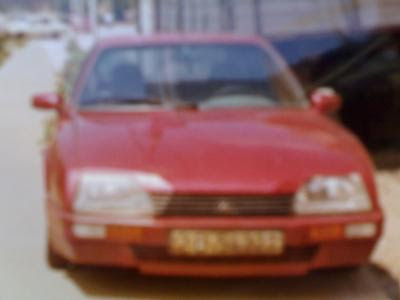
Asta este cazul unui Citroen CX 2400 Prestige de vanzare in Targoviste care se gaseste la http://www.ieftineala.ro/index.html . Clar spune ca masina fusese dat dar de regele Spaniei in 1986 lui Elena. Buuun. In plus circula prin capitala, in timpul comunismului, cu numarul 17-B-4031. Buuuun. Revolutia a gaist-o in garajul Securităţii de Comandamentul Naţional de Grăniceri. Si-a facut treaba si la politia frontierii in Constanta, pana in anul 2002, cand s-a vandut. Buuuuuun.
Totusi sunt unele detalii care nu se potrivesc. Masina in poze e clar un CX seria 1, deci nu are cum sa fie din 86. Daca are numarul de serie 00003 (fapt nedocumentat) inseamna ca anul de fabricatie trebuie sa fie 1976. Deci ar fi surprinzator ca regele Spaniei, in 1986, sa fi dat Ceausestilor o masina veche de 10 ani. De fapt nici nu s-a u intalnit in 86. E posibil, doar, sa se fi intamplat in 1979, cand Nicolae si Elena a vizitat Spania la invitatia regala. Totusi trebuie sa ne intrebam ce s-a intamplat cu masina intre 1979 si 1986.
Numerele 17-B au fost emise in doua serii: prima in 1979-80, a doua in 1987-88. Din nou, daca era masina Elenei, aproape sigur ar fi avut 1-B cu trei sau patru cifre, corespondand cu restul masinilor familiei si oficiale.
Blindata nu e. Unica in Romania anilor 80 nu era - masina alba, de exemplu, exista, fiind importata din Germania prin 86-87, si am auzit de cateva alte exemplare. O mica cercetare arata faptul ca cuvantul "Ceausescu" nu exista pe talon. Aproape sigur era o masina de ambasada, sau proprietatea unui strain, sau o masina importata
si apoi confiscata. Posibil sa fi fost vanduta la licitatie de catre stat. Posibil chiar sa fi fost folosita de forte speciale, precum alte "masini tari". Samburele de adevar exista intrucat Nicu Ceasuescu la un moment intr-adevar avea un Citroen, inmatriculat 1-B-232. In plus, nu e primul CX "al Elenei" sa fie pus la vanzare ... acum cativa ani exista si exemplarul visiniu de mai jos. Constatam ca e o masina aproape sigur fara legatura la fostii dictatori, si ramanem pe faptul ca de fapt e o masina de serie in stare nu chiar excelenta.
Din pacate povesti false, unele create ca solutia unui mister, altele fabricate din dorinta de a vinde un obiect, exista peste tot, exista bine inteles si cateva masini bona fide. (Un bun prieten are DS-ul lui Henri Coanda, spre exemplu, iar primul proprietar personal a Volgii mele a fost sef de securitate pe Vrancea.) E foarte important sa invatam sa facem distinctie dintre povesti si realitate!



In Romania there is a tendency for every old car to have had a famous former owner. Normally it is either Dej or Ceausescu, but occasionally it is any other illustrious person around at the time. The cars tend to be Volga / ZIL / ZIM / Dacia 2000 / Dacia 1301 / Fintail Mercedes. Sometimes there is a grain of truth, the car having being owned or used by a former high-ranking official, or hving taken part in a few motorcades, or having belonged to the State garages. But if we believe everything the sellers of these cars say then it turns out that Dej and Ceausescu had tens if not hundreds of cars between them.
This is the case with a Citroen CX 2400 Prestige advertised as having been owned by Elena Ceasuescu at http://www.ieftineala.ro/index.html . Apparently it was given to her by Juan Carlos of Spain in 1986. It was driving round the capital with the plates 17-B-4031. At the Revolution it was in a garage of the Romanian secret border police. It carried out some work over the next decade with the border polce in Constanta before being withdrawn and sold in about 2002.
But some things don't stack up. From the photo it's clearly a Series 1, so was at any stage not new in 1986. If it is indeed the third ever nade (which is dubious) then the year is 1976. Would the King have given Ceasuescus a 10-year old production car? Doubtful. In fact, they did not even meet in 1986. it is possible (just) that the car could have been given as a gift in 1979, when the Ceasuescus spent a few days with the Spanish royals. But that still leaves unclear what happened to the car
between 1979 and 1986.
The plates beginning 17-B were issued in two series, first in 1979-80 and second in 1987-88. But if it had been the Ceasuescus it would have had the "important" 1-B plates wtih three or four digits, as all their other cars did.
It is not armoured. It was certainly not unique in 80s Romania - among a few others I've head of, the white one in the picture was definitely around then, having been imported from West Germany in 1986/87. A few questions reveal that the word "ceasuescu" appears nowehre on the logbook. Perhaps it was a former Embassy car, or one imported by a foreigner, or sold by the State at auction having been abandoned or confiscated. Possibly, too, it maight have been owned by the Securitate or other special forces. Other Western models certainly were at the time. The grain of truth is that Nicu Ceasuescu did at one stage have a Citroen, registered
1-B-232. But, interestingly, a couple of years ago, another CX (the burgundy example) was put up for sale, also "having belonged" to Elena Ceasuescu... We can only conclude that this particular car is almost certainly not linked to the former dictators. All that remains is that it is a normal production car, albeit a desirable model, and in need of a bit of TLC, to put it kindly.
There are many stories being circulated by many wheeler-dealers. Doubtless there are a few bona fide cars around as well. (A good friend owns Henri Coanda's DS, for example, while the first "non-Government" owner of my Volga was head of the Vrancea securitate.) But we must learn to tell the difference between pretty stories and the truth.


smOGg~~_3.jpg)


